
Patio Resealing in Pasco County: When and Why Your Pool Deck Needs It
Patio resealing protects your Pasco County pool deck from cracks, fading, and costly repairs.
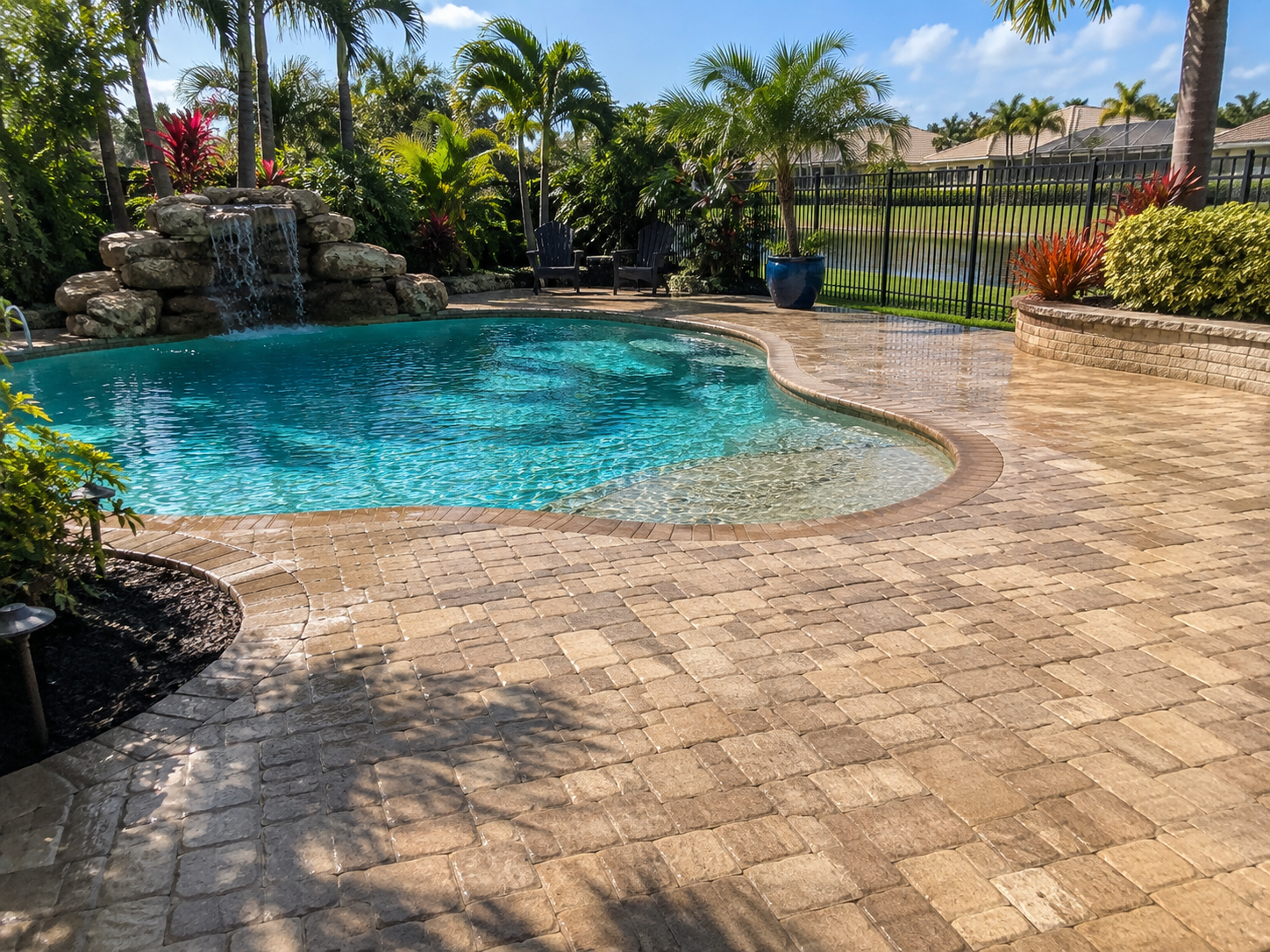
If your patio feels rougher than it used to, or you're spotting faded patches near the pool steps, patio resealing might already be overdue. Your Tropical Oasis works on pool decks and patios across Pasco County every week, and resealing is one of the most overlooked parts of pool ownership. Homeowners focus on water chemistry and pump maintenance, but the concrete or paver surface around the pool takes a beating too, from sun, chlorine splash, and Florida's brutal humidity swings.
A well-timed reseal isn't cosmetic. It protects the surface underneath from cracking, staining, and slow structural wear. Skip it too long, however, and you're looking at a much bigger repair bill down the road.
Why Pasco County Patios Wear Out Faster
Florida sun is relentless, and Pasco County gets more of it than most people realize. UV exposure breaks down sealant over time, and once that protective layer is gone, the surface underneath is exposed to everything.
Here's what accelerates the damage locally:
- Intense UV rays that fade and dry out unsealed pavers or stamped concrete
- Frequent afternoon storms that drive water into porous surfaces
- Chlorine and salt splash-out from pool use
- Humidity that encourages mold and mildew growth in shaded areas
- Sandy soil shifts that can create small cracks pavers are especially vulnerable to
Because of this combination, most patios in this area need resealing more often than the national average. A patio in a drier, cooler climate might go five or six years between seals. Around here, three to four years is usually more realistic.
Signs Your Patio Needs Resealing
You don't need to guess. There are clear physical signs that tell you it's time.
The Surface Feels Rough or Chalky
Run your hand across the patio. If it feels gritty or leaves a powdery residue on your palm, the sealant has broken down. This is one of the earliest warning signs, and it's easy to miss because it happens gradually.
Water Soaks In Instead of Beading
Pour a small amount of water on the surface. On a properly sealed patio, it beads up. If it soaks in within a few seconds, the sealant is no longer doing its job.
Color Looks Faded or Uneven
Sun exposure fades sealant unevenly, especially in spots that get more direct light. Faded patches near the pool edge or along the sun-facing side of the patio are a strong indicator.
Weeds or Moss Growing Between Pavers
Once sealant wears away, joint sand loosens and moisture gets trapped between pavers. That creates the perfect environment for weeds, moss, and ant colonies to move in.
Cracking or Flaking
This is the late-stage warning sign. Cracks mean water has already gotten underneath, and freeze-thaw isn't even the culprit here, it's more about heat expansion and contraction combined with ground movement. Left alone, small cracks widen fast.
When Should You Reseal in Pasco County
Most homeowners ask us for an exact number, and while every patio is different, here's a realistic guideline based on the work we see across the area.
- Stamped or poured concrete: every 2 to 3 years
- Travertine or natural stone pavers: every 3 to 4 years
- Interlocking concrete pavers: every 3 to 5 years
- Pool decks with heavy foot traffic: closer to the 2-year mark
If your patio sits in full sun most of the day, lean toward the shorter end of these ranges. Shaded patios under a lanai or covered area can often stretch a bit longer between seals.
One thing we tell every client: don't wait for visible damage before scheduling a reseal. By the time cracking shows up, you're often looking at repair work in addition to resealing, which costs more than maintenance alone would have.
Why Resealing Matters Beyond Looks
A lot of homeowners think of resealing as purely a cosmetic refresh, something to make the patio look new before hosting a summer pool party. That's part of it, but the real value is protective.
Sealant creates a barrier against water intrusion, which is the number one cause of paver shifting and concrete cracking in Florida. Because pool areas deal with constant splash-out, unsealed surfaces near the water absorb moisture repeatedly throughout the day. Over months, that moisture works its way into small pores and joints, weakening the base beneath the surface.
There's also a slip factor. As sealant wears down, some surfaces actually become more slippery when wet, not less, especially smooth stamped concrete. A fresh, properly applied sealant with the right finish can improve traction around the pool, which matters when you've got kids running around in wet feet.
A quick story from a recent job: we resealed a paver deck in Land O' Lakes where the homeowner had let it go almost six years without maintenance. The joint sand had washed out in several spots, and two pavers had actually started to shift under a step. What could have been a simple reseal turned into a partial paver reset before we could even apply the sealant. That's the kind of extra cost a routine reseal schedule prevents.
DIY Resealing Versus Hiring a Professional
We get asked about DIY resealing often, and honestly, it's possible for small, simple patios. But there are real risks worth knowing about before you buy a roller and a bucket of sealant from the hardware store.
Common DIY mistakes we see:
- Applying sealant over a surface that wasn't fully cleaned or dried first
- Using the wrong sealant type for the material (matte versus wet-look, solvent versus water-based)
- Uneven application that creates blotchy, shiny patches
- Sealing over existing mold or mildew, which traps it underneath
- Skipping joint sand replacement on paver surfaces before sealing
Because pool decks in Pasco County deal with constant moisture and heavy foot traffic, the prep work matters as much as the sealant itself. A professional reseal typically includes pressure washing, weed and moss treatment, joint sand replacement where needed, and a two-coat application for even coverage. That level of prep is hard to replicate with a weekend DIY project, and mistakes often mean redoing the whole job within a year.
What to Expect During a Professional Reseal
If you're scheduling a reseal for the first time, here's what the process generally looks like from start to finish.
- Inspection: we check for cracks, loose pavers, or drainage issues before starting
- Pressure washing: removes dirt, algae, and old sealant residue
- Repairs: any cracked or shifted areas get addressed before sealing
- Drying period: the surface needs to be completely dry, usually 24 to 48 hours depending on humidity
- Sealant application: applied in thin, even coats, typically two passes
- Cure time: most sealants need 24 to 72 hours before the pool area sees heavy use again
Because Florida humidity slows down drying time, scheduling matters. We typically recommend resealing during a stretch of drier weather, which is why late spring and early fall tend to be popular booking windows for our Pasco County clients.
Frequently Asked Questions
How long does patio resealing last in Florida?
Most sealants last between 2 and 5 years in Florida, depending on the material and how much direct sun exposure the patio gets. Pool decks with heavy foot traffic and full sun typically need resealing closer to the 2-year mark.
Can I use my pool right after resealing?
No. Most sealants need at least 24 to 72 hours of cure time before the surface is ready for foot traffic and splash exposure. Using the pool too soon can damage the fresh sealant and shorten its lifespan.
Does resealing fix cracks in my patio?
Resealing alone does not fix existing cracks. Cracks need to be repaired first, then sealed over as part of the process. If cracks are extensive, a full repair may be needed before resealing makes sense.
Is a matte or glossy sealant better for pool decks?
It depends on your priorities. Matte finishes tend to show fewer imperfections and can offer better slip resistance, while glossy or wet-look finishes enhance color but can be more slippery when wet. We help clients weigh both based on how the space is used.
How much does patio resealing cost in Pasco County?
Cost depends on square footage, material type, and how much prep work or repair is needed. A patio with existing cracks or paver shifting will cost more than routine maintenance resealing on a well-kept surface.
Can resealing help with mold and algae around my pool?
Yes, to a degree. A fresh seal creates a smoother, less porous surface that's harder for mold and algae spores to grip onto. It's not a permanent fix, but it does slow regrowth compared to an unsealed, porous surface.
If your patio is starting to feel rough, fade, or show early cracking, don't wait for it to get worse. Your Tropical Oasis offers professional patio resealing throughout Pasco County, and we're happy to take a look and tell you honestly whether you need a full reseal or just a bit more time. Book a consultation with our team today.
Read our latest blog & articles


.webp)


.jpeg)
.webp)
